SBP Realty
Taking a new real-estate brand from a single static page to a full rental platform — designed, built and integrated with a CRM. It has been live since October 2024, carrying a catalogue of 150+ listings and still generating realtor leads.
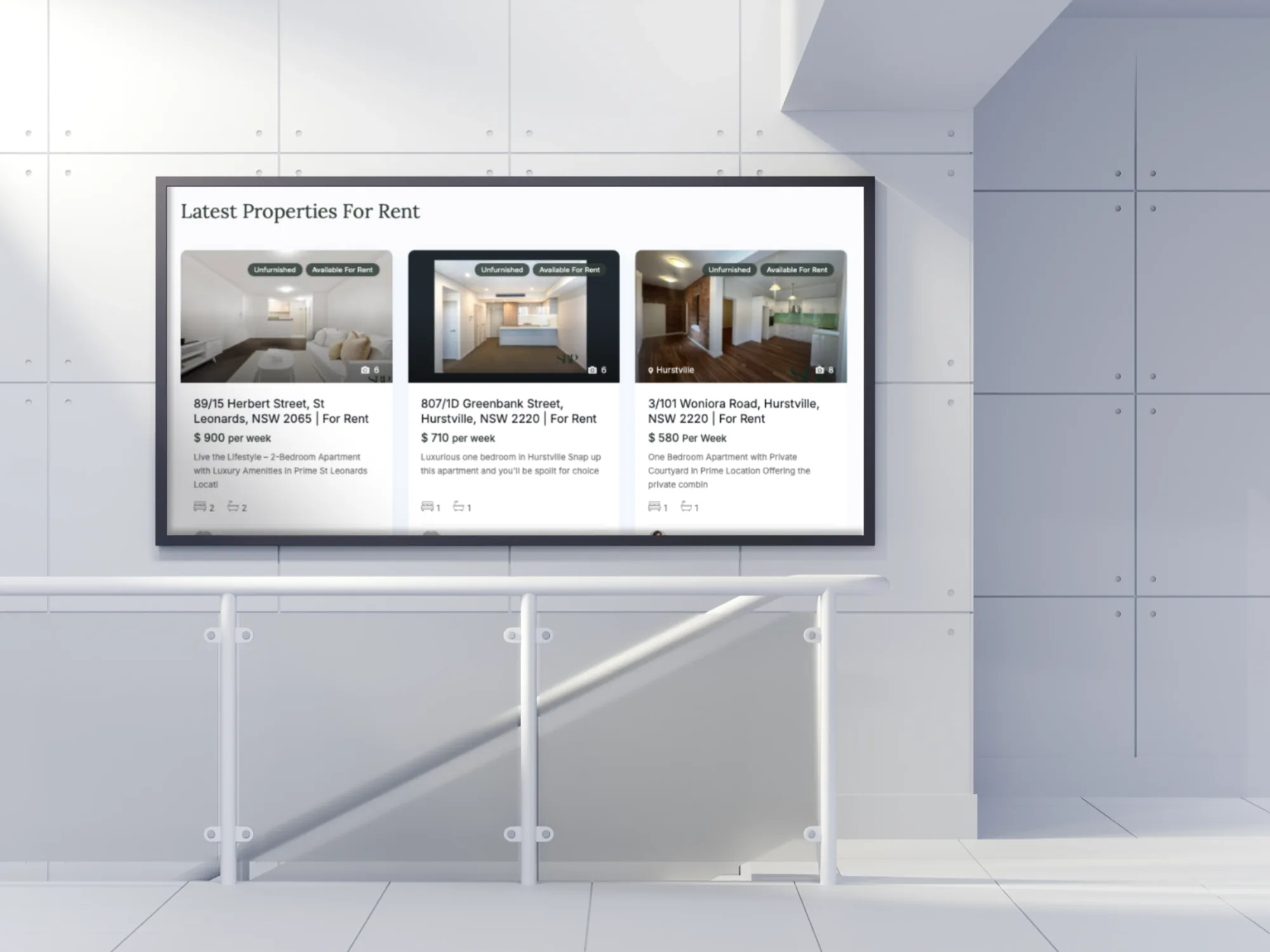
Project overview
SBP Realty previously had only a single static homepage. I led the end-to-end design and build of a fully functional rental website on WordPress, customised with Elementor and integrated with a WordPress CRM for properties and leads.
Before
One static homepage. No listings, no search, no way for a renter to enquire — and nothing for agents to manage.
After
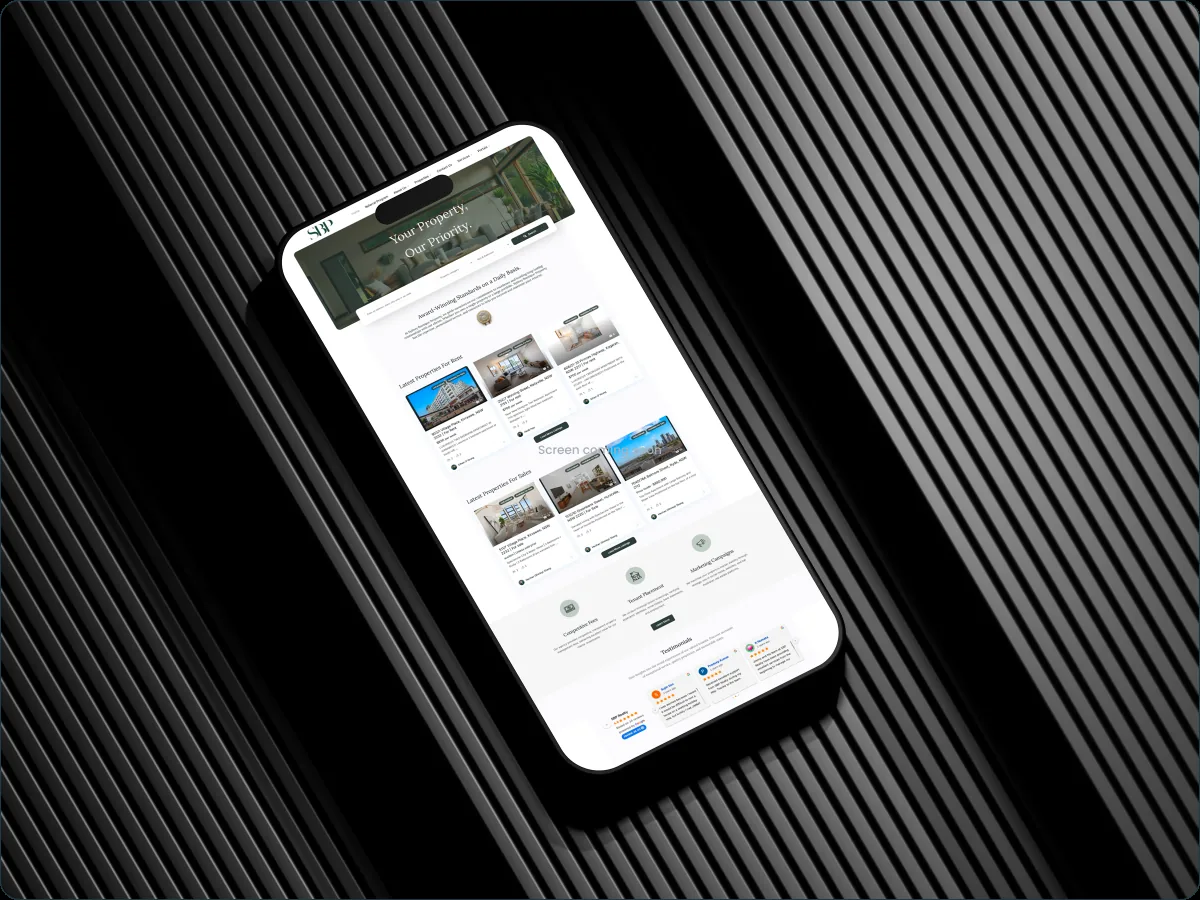
A full rental platform: browsable listings, agent-curated property detail, filters, and enquiries routed straight into the CRM.
The challenge
A new brand competing against established Sydney rental platforms, with almost nothing online to compete with.
Minimal online presence
The old site was a single static homepage, offering no listings, no search and no way to capture a lead.
Falling behind competitors
Established Sydney rental platforms offered richer features and far better experiences, leaving SBP at a disadvantage.
Missing the details renters need
Renters couldn’t quickly see key facts like whether a property was furnished, causing frustration and lost enquiries.
The brief: build a platform renters would actually use, and agents could actually run — inside the constraints of WordPress.
Process
Site structure → lo-fi prototypes
- Mapped the complete site as a feature flowchart before drawing a single screen.
- Produced lo-fi prototypes in Figma for Home, Listings, Property Details and the conversion pages.
- Settled page structure and content hierarchy early, so every later decision had somewhere to sit.
Goal — agree the shape of the whole site before investing in visual design.
Suburb profiles — UX research
- Built a feature matrix for proposed Suburb Profiles, covering purpose, audience, and static vs dynamic data.
- Explored how local context could help renters choose between otherwise similar listings.
- Cut it from the build once WordPress template limits made it unworkable.
Goal — pressure-test an ambitious idea early, and know when to let it go.
User journey mapping
- Defined renter paths from first discovery through to enquiry.
- Identified the friction points and content gaps along each path.
- Introduced Furnished/Unfurnished tags in the CRM to cut cognitive load and speed up decisions.
Goal — design around how renters actually search, not how the CMS happens to store data.
Agent collaboration on property detail
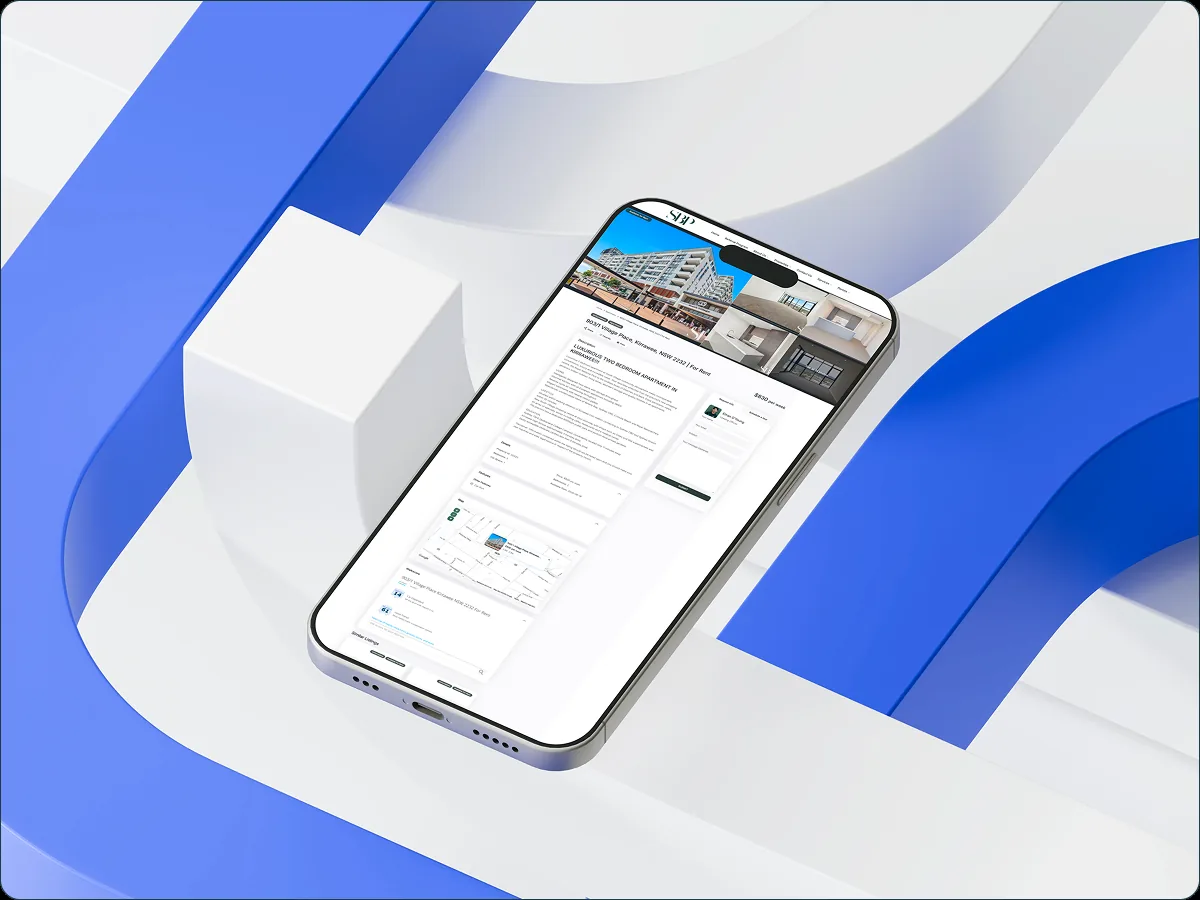
- Worked directly with real-estate agents to co-create the Property Details blueprint.
- Matched the information hierarchy to the questions renters ask first.
- Curated the core set: furnished status, beds, baths, parking, amenities, and nearby transport, schools and shops.
- Closed each listing with application and inspection steps, plus direct agent contact.
Goal — put the facts that decide an enquiry at the top of the page.
Build & integration
- Built the final site on WordPress, customised with Elementor.
- Integrated a WordPress CRM for listings, lead capture and agent notifications.
- Implemented an SEO-friendly structure and internal linking to improve discoverability.
Goal — ship a platform the agents can run themselves, long after the internship ended.
Key features
Six things the platform had to do well for renters to use it and agents to keep it running.
Responsive listings
Seamless browsing across desktop, tablet and mobile — the same listing reads well on every screen.
Furnished / unfurnished tags
The single detail renters filtered for most, surfaced at a glance instead of buried in a description.
Property details blueprint
An agent-curated information hierarchy, so renters get the most decision-relevant details first.
Enquiry integration
Enquiries route directly into the WordPress CRM for lead management and agent notification.
Filters & search
Intuitive filters make property discovery faster, and far less frustrating.
Scalable content model
Built so the catalogue could keep growing — it has since scaled many times past its launch size on the same model.
Results & impact
The platform went live in October 2024 and has been running ever since — agents publishing listings, renters enquiring, with no rebuild in between.
A catalogue that keeps growing
Agents have published continuously since launch, with listings cycling through as properties are leased and sold. The catalogue has grown many times past the handful it started with — on the same content model, with no rebuild.
30% faster internal workflows
Integrating the WordPress CRM streamlined data entry, updates and enquiry tracking, cutting repetitive manual work for agents.
Skills gained
My first end-to-end project: research and design through to a built, deployed and search-optimised website.
UX / UI design
- Figma wireframing & prototyping
- Website flow mapping
- Feature ideation & information hierarchy
- UI component creation — typography, palettes, layouts
- Design artefacts: flowcharts, feature matrices, infographics
Web development
- WordPress platform design & backend management
- Elementor customisation for responsive layouts
- Front-end development (HTML, CSS, JavaScript)
- Translating Figma designs into functional builds
Optimisation & SEO
- On-page SEO optimisation (content & keywords)
- Site architecture & internal linking
- Content optimisation for engagement & discoverability
Collaboration & research
- Stakeholder interviews with real-estate agents
- Cross-functional work with marketing & senior designers
- UX research: competitive analysis, renter pain points
- Co-creating the property information hierarchy with agents
Reflection
Collaboration creates business value
Partnering directly with agents showed me what renters really look for. Their feedback shaped the property-detail hierarchy, making the site practical for the business as well as its users.
Constraints sharpen thinking
Working inside WordPress template limits forced creativity. Suburb Profiles never shipped, but exploring them sharpened my ability to ideate, test and adapt to a platform’s edges.
End-to-end is a different skill
Carrying one project through research, prototyping, build and SEO taught me how much design improves when you also own how it gets made.